
Micro-Local Marketing: How to Dominate Your Neighborhood
There’s a small bakery tucked into a quiet street corner. No flashy signboards, no influencer shout-outs.
And yet, every morning, the line outside stretches around the block.
The secret?
They don’t try to market to the entire city.
They just dominate their neighborhood radius — building recognition, trust, and habit, one block at a time.
This is the art of micro-local hypergeotargeted marketing, where every click, message, and ad is laser-focused on people who can actually become customers.
Why “Local Marketing” Isn’t Local Enough
Most small businesses today already understand that local visibility is crucial for growth. They’ve done all the textbook things — created a Google My Business profile, optimized it with photos and reviews, added “near me” keywords to their ads, and sprinkled their city name across social media captions. It feels like they’re doing everything right. But here’s the truth most don’t realize: their “local” strategy isn’t actually local enough.
Let’s break it down.
When a café in Andheri West says it’s targeting “Mumbai,” that sounds smart at first — after all, Mumbai is the city, right? But in reality, that’s far too broad. People living in Colaba, Powai, or even Andheri East aren’t going to travel 10–15 kilometers just to grab a latte or try a new croissant spot. To them, your café doesn’t even exist in their daily radius. So every rupee you spend showing your ads to those people is basically a budget leak — money flowing out without any realistic chance of conversion.
That’s where micro-local geo-targeting comes into play — the real game changer. Instead of wasting ad spend across an entire city, it allows you to narrow your visibility down to your immediate surroundings. Think of it as drawing a digital fence around your most profitable radius — maybe just 2 or 3 kilometers around your café, salon, clinic, or store — and focusing all your marketing energy inside that zone.
Now your message reaches people who can actually walk in, order, visit, or book an appointment. You start appearing in front of those who pass by your street daily, who already live or work in your neighborhood, and who can convert with minimal friction.
This hyper-local approach not only stretches your ad budget further but also builds stronger community recognition. Over time, your brand becomes “that place nearby” rather than just another generic business somewhere in the city.
In short — local marketing is good, but micro-local marketing is powerful. It’s not about being visible to everyone in your city. It’s about being unmissable to the people right around you.
The Real Cost of Broad Local Ads
When you run ads across an entire city, your targeting looks powerful on paper: thousands of impressions, hundreds of clicks.
But here’s what the numbers don’t tell you — a majority of those clicks come from users too far away to convert.
You’re paying for visibility that doesn’t create footfall.
That’s like printing 10,000 flyers and tossing half of them in neighborhoods you don’t serve.
In contrast, with geo-fencing advertising, you only target people within a fixed radius — say 2 kilometers of your shop or office.
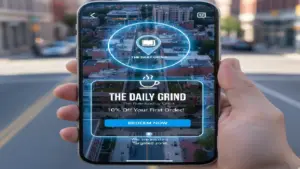
You can even exclude areas where you don’t want to waste impressions.
The result?
Lower ad spend. Higher engagement. More meaningful conversions.
What Exactly Is Micro-Local Hypergeotargeting?
Think of it as drawing a digital border around your most profitable area.
You’re not just targeting “Bangalore” — you’re targeting “Koramangala 4th Block,” or even specific apartments and coworking spaces.
You can use tools like Google Ads, Meta Ads Manager, or specialized platforms to set pin-based geo-fencing.
Here’s where it gets even more interesting — you can layer multiple data points:
- Demographics (age, income, interests)
- Behavior (visited your website, interacted with your content)
- Real-time movement (currently inside your geofenced area)
This combination makes your campaign surgical.
Instead of wasting money on mass impressions, you show the right message to the right person at the right location.
→ Try integrating this tactic with geo-fencing advertising strategies and hyperlocal SEO optimization to get both real-time visibility and long-term organic reach.
How It Works in Practice
1.Draw the Boundary
Use Google Ads or Facebook Ads Manager to define a radius or manually drop pins around your area.
The smaller the better — start with 1 km and expand only if results plateau.
2.Craft Local-First Messaging
Ads that include area names perform significantly better.
Instead of “Best Pizza in Town”, say “Hot Pizza Delivered in Just 10 Minutes to Lakeview Road.”
3.Create Micro-Landing Pages
Each targeted area should lead to a dedicated page customized for that neighborhood.
That’s what local landing page optimization is all about — matching your digital messaging to your audience’s surroundings.

4.Track, Learn, and Scale
Measure performance at the area level. Which neighborhood responds most? Which ad copy drives more store visits?
Use these insights to expand strategically, not blindly.
Why Micro-Local Works So Well
People don’t just buy products — they buy familiarity.
They trust businesses that feel local, that seem to understand their habits and preferences.
Micro-local marketing taps into this psychology by creating what’s called the proximity bias — the closer something feels, the more relevant it seems.
That’s why hyperlocal SEO services play a huge role.
Optimizing your website, GMB listing, and reviews with neighborhood-level keywords helps you appear when someone searches “near me” or mentions your locality directly.
And when your geo-fenced advertising aligns with those organic touchpoints, your brand starts showing up everywhere your ideal customer looks — both online and offline.
Building Trust Through Community Presence

Most people ignore random brands online. But they listen to what’s happening in their local community.
That’s why smart businesses join community Facebook groups, society WhatsApp chats, and neighborhood forums.
They don’t jump in to sell — they share tips, answer questions, or promote local events.
Over time, they become that brand — the one people recognize, trust, and recommend.
This is the foundation of community engagement marketing strategies — being part of the digital neighborhoods where real conversations happen.
It’s also one of the most organic, low-cost ways to build brand recall without traditional advertising.
Hyper-Personalized Offers That Win Hearts
Once you’ve built local awareness, it’s time to make it personal.
Imagine sending an SMS campaign that says:
“Hey Park View Residents, we’re offering 15% off this weekend just for your block!”
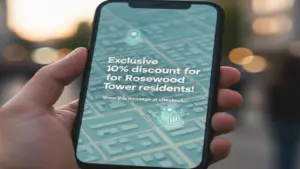
That message doesn’t just feel targeted — it feels exclusive.
This is what personalized marketing campaigns are designed for — building emotional loyalty through relevance.
When people feel your offer is “just for them,” conversion rates skyrocket.
And the data you collect from these micro-offers can power even smarter data-driven marketing strategies later — helping you analyze exactly which neighborhoods or audience clusters perform best.
Real-World Success Example
A home cleaning service in Pune used to target the entire city.
They switched to micro-targeting just four apartment societies near their base.
Within a month:
- Their ad costs dropped by 42%
- Conversion rates increased by 65%
- Repeat customers grew 3×
They didn’t increase their marketing budget.
They just improved their local marketing strategy — proving that less reach can mean more revenue.
Turning Micro Reach into Macro Results
Micro-local marketing isn’t a “small” tactic — it’s the foundation of scalable growth.
Once you dominate one area, you can replicate the same system across other zones like a digital ripple effect.
Think of it as block-by-block expansion, powered by automation, consistent branding, and performance data.
For example, by combining local marketing services for small businesses with hyperlocal SEO and geo-fenced ad campaigns, you can slowly take over an entire city without losing authenticity.
This is how emerging D2C brands, cafés, and local service providers quietly become regional leaders — not through volume, but through precision.
The Bigger Picture: Beyond Micro-Targeting

As digital marketing evolves, something fascinating is happening — while some consumers welcome personalized ads, others are consciously stepping away from digital clutter.
They value simplicity, peace, and authenticity.
They turn off notifications, use minimal social media, and actively avoid aggressive marketing.
Reaching these people requires a very different strategy — one that aligns with their lifestyle and values.
That’s where our next topic comes in:
Marketing to Digital Minimalists — a deep dive into connecting with audiences who crave calm, not noise.
Because sometimes, the best marketing move isn’t to speak louder — it’s to speak less, but mean more.
Final Thoughts

Micro-local hypergeotargeted marketing isn’t about shrinking your audience.
It’s about sharpening your focus.
The businesses that win in 2025 won’t be the loudest — they’ll be the most relevant.
And relevance starts right outside your door.